Rohit S. Loomba, MD
DOI: 10.13140/RG.2.2.14131.54566
This particular post won’t address a cardiac morphology issue per se. This post is one that is the result of a lot of effort over the past several months. There is a lot of talk all around medicine about artificial intelligence and machine learning tools but there are few tools really being developed. Sure, there are the tools that help with clinic scheduling and writing notes, etc but when it comes to the actual medical sciences training, validating, and deploying models takes a while!
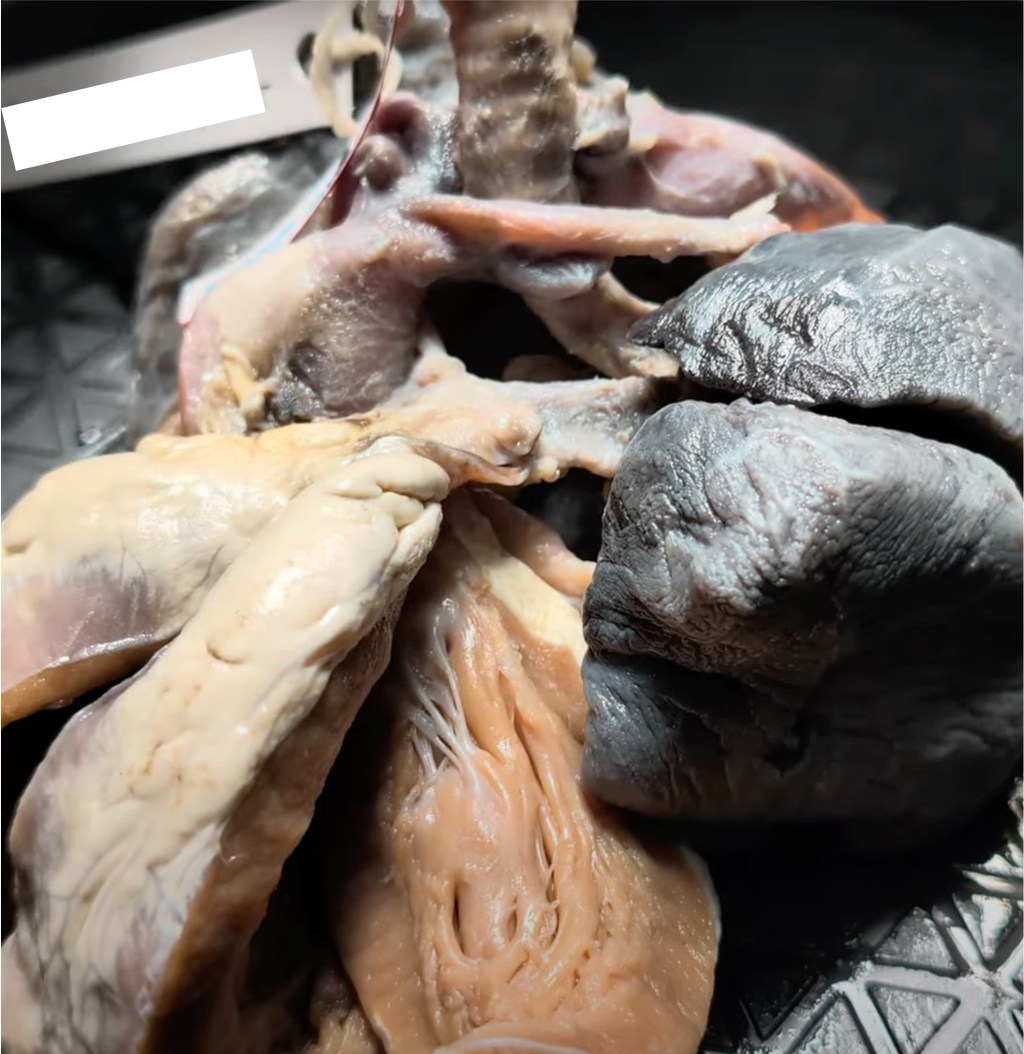
I have a particular interest in machine learning and set forth to see if a machine learning model could be trained to detect morphologic structures in images of organ specimens. Being a cardiac morphologist I started with the heart, of course. Being a curator of several cardiac registries/heart archives over time I was able to take thousands of images of normal hearts. Using approximately 2,000 images with nearly 10,000 annotations of 15 structures, I was able to train a model with nearly 80% mean average precision!
MorphoBot will be a free app that launches soon for Android and iOS. It will allow users to use the camera on their device to take a picture in real-time or use a saved image which the model will then process and return a labeled version of the image. The youtube video embedded above is a preview of the app in action!
This can be helpful for those who are in the anatomy lab and learning about the heart and need to be oriented. This can be helpful for those dissecting hearts at the autopsy bench and need some orientation to the heart. This can be helpful for those creating labeled images for publication. This can be helpful for those who are curating their own archives and want to quickly label images. This can also be helpful for those peer-reviewing published manuscripts and want to double check image labels or those who are simply reading a published manuscript and want to get oriented to an image in the paper.
Once this is released others will find use cases not dreamt of so far. The normal heart model will continue to be fine-tuned to help with it’s performance. It will also be forked to see how the model can perform with congenitally malformed hearts.
Models for other organs will also be developed. The kidney has a robust model with nearly 60% mean average precision. My hope is that all released modules will have mean average precision of 70%. All the organ modules will be available within the same app and all for free for the sake of education and academic progress.
 TALKING HEARTS