Rohit S. Loomba
DOI: 10.13140/RG.2.2.27075.11049
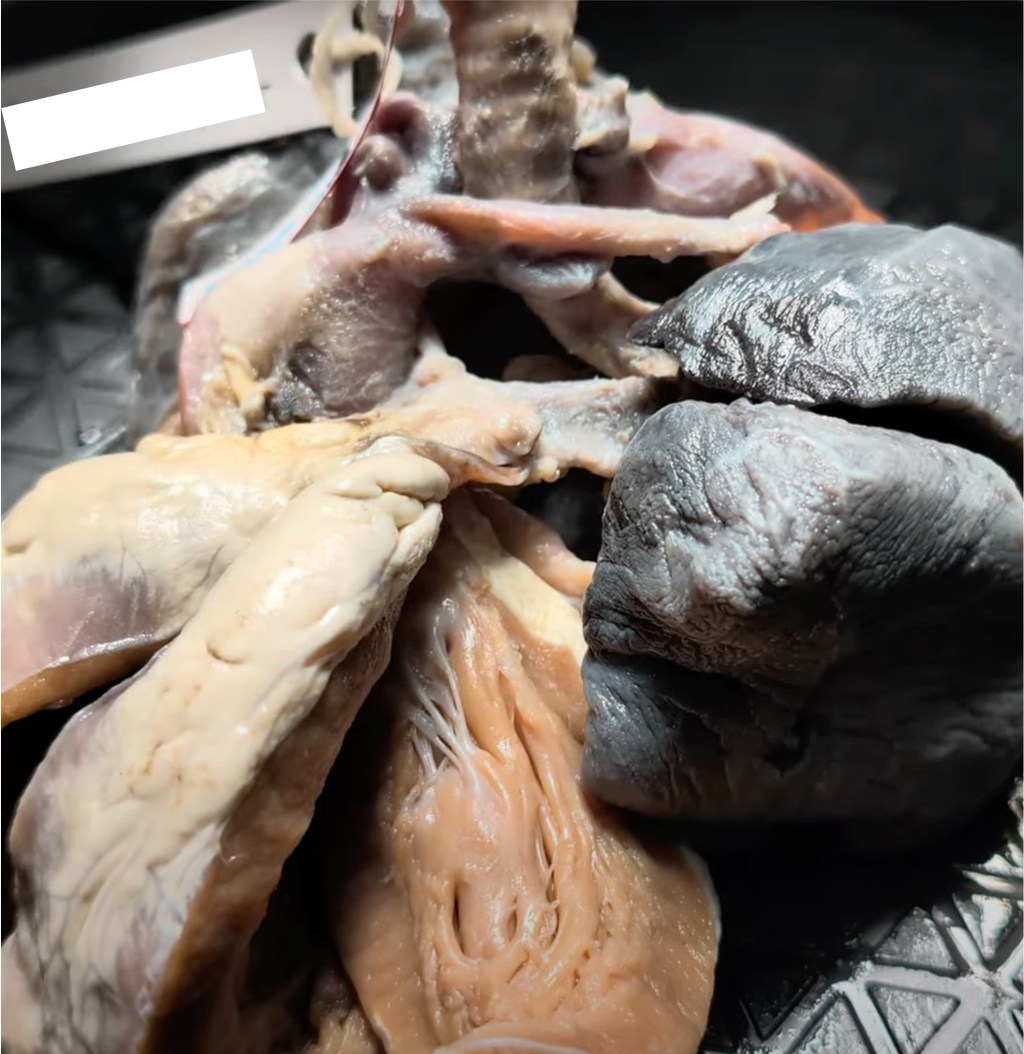
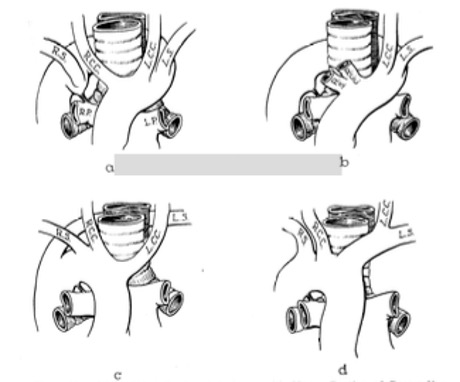
In the setting of a right aortic arch, the descriptor “mirror image branching” is often utilized to describe the situation when the aorta courses over the right bronchus and gives rise to the left brachiocephalic artery, then the right carotid artery, and then the right subclavian artery in that order from proximal to distal. The origin of the term seems to be from Dr. Jesse Edwards who was a pioneer in cardiac pathology. He was the founder and curator of the Jesse E. Edwards Registry of Cardiovascular Disease in Minnesota. Our field has benefitted a great deal from his contributions.
As far as I can tell it was from Dr. Edwards’ paper entitled “Anomalies of the Derivatives of the Aortic Arch System” published in 1948 where this descriptor first enters the realm publication. There’s always a possibility there was some previous paper but this is what I could identify as the original published source. Dr. Edwards describes what he refers to as “Right-sided aortic arch with upper portion of descending aorta on the right side; branches forming a mirror image of the normal branches”.
Click here for Dr. Edwards’ paper
The term mirror image seems imprecise for this anatomic entity, however. Mirror image usually refers to an image or object that has its parts arranged in the reverse of the original, as if reflected in a mirror. The shape and size remain the same but the directionality is reversed. With regards to the aortic arch this would imply a right sided aortic arch which from which arise the brachiocephalic artery, the left carotid artery, and the left subclavian artery in that order from proximal to distal.

This is not the case in what is described using the term right aortic arch with mirror image, branching, however as the the first branch in this setting is the left brachiocephalic artery which then gives rise to the left subclavian and left common carotid artery. Additionally in the setting of a normal aorta, the aorta the head and neck vessels are all initially anterior to the trachea. In the setting of the so-called “right aortic arch with mirror image branching”, only the left brachiocephalic artery and then, subsequently, the left carotid artery, and left subclavian artery are anterior to the trachea. In true mirror-imagery the anterior-posterior relationships should remain the same as well.
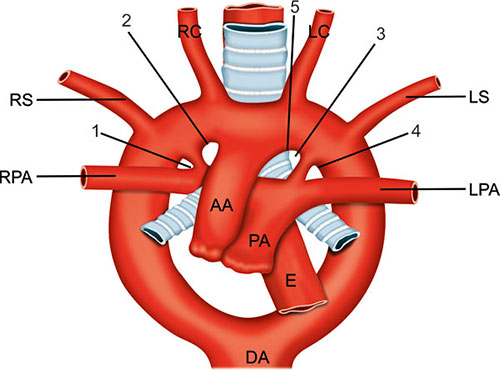
From a developmental standpoint there is also no basis for the use of the descriptor “mirror image branching”. Aortic arch anomalies are due to regression and persistence of different segments of the aortic arch and not mirror image duplication.
While the descriptor “mirror image branching” has been utilized for some time, at least 1948 if Dr. Edwards’ report is in fact the original to use it, that doesn’t make it any more accurate. Some may write this off as something that may not be literally accurate but is understood by those who need to use this term, this brings into question why any such labels like this are needed. Why not simply describe the aorta rather than use a label to do so. Using such a label assumes that those receiving the communication understand the label and how it is being used. Those who aren’t familiar with the label and try to interpret it literally will have a vastly different understanding of the anatomic situation.
Language is meant to convey ideas and in the sciences, particularly clinical medicine, language should be used in a way to maximize clarity and understanding. The words used to describe something, such as anatomy, should be chosen in a fashion that those who speak the language can understand what is being described without actually knowing much about the underlying topic. The same can be said with regards to eponyms.
Utilizing sequential segmental anatomy when it comes to the heart can help with this. By describing the heart and its vessels in a simple to understand fashion using accurate descriptors that can be literally used helps ensure understanding in those not as fluent in the underlying language being utilized as well as those who may not have a mastery of the subject matter being described. Why not simply describe the aorta as being an aorta that crosses over the right bronchus and descends on the right or left side and gives rise to the left brachiocephalic artery, the right carotid artery, and the right subclavaian artery, proximally to distally. Certainly this description is more intuitive than right sided aorta with “mirror image branching.
Some will approach this with a “who cares”, but if the purpose of language is to communicate ideas and knowledge effectively we must make sure our descriptions of phenomena are in concordance with this. If we are to assume that language is acceptable if there are community-based exceptions to how words are used then this could lead to misunderstanding of the underlying meaning of words between groups who assign a different community-based definition. This would obviously pose a large linguistic obstacle as well.
Of interest and of note now is the use of natural language models or large language models. If one were to ask one of these models, such as Gemini, to create a figure of the norma aorta with the head and neck vessels and then to produce the mirror image of this, it would not result in the right aortic arch with so-called “mirror image branching”. In a world where electronic processing and multicenter databasing efforts are becoming increasingly important, particularly in pediatric cardiology and cardiac surgery, the words we use to describe clinical phenomena require more care and thought in their selection and use. This will ensure the words are used uniformly by all and the results utilizing electronic processing tools and multicenter databases can properly be interpreted.
We should not let history and group-think lead us to continue using inaccurate terminology. History and group-think provided medicine with nearly 3,000 years of therapeutic bleeding as the therapy for many ailments. We should strive for better as our knowledge, skill, and technology all advance. I have used this term as well and it was while I was making two recent anatomic videos (one of which is linked above) that I realized that the term didn’t make sense. So, yes, even I can and should do better!
 TALKING HEARTS